
We may earn a commission from providers listed here, which can affect where they appear but never our ratings or reviews.
TopWeightLoss.us
Safety55 min read

GLP-1 Microdosing in 2026: What the Evidence Actually Shows

Does microdosing semaglutide or tirzepatide work? What surveys, dose-ranging trials and SURMOUNT-MAINTAIN show, the safety risks of self-dosing, and the cost math.

Last updated November 2, 2026

Francheska Capistrano, Medical Content Reviewer

Francheska Capistrano, RMT, MPH

Medical reviewer · Our review process

Key points

  • No randomized trial has tested GLP-1 "microdosing" as it is marketed, and no human randomized trial of microdosing had reported results as of November 2026.
  • Microdosing is common: in an Evidation survey of 8,486 current injectable GLP-1 users (self-reported, ISPOR 2026), 15.0% said they microdose now or did before, most often because of side effects, cost or weight maintenance.
  • The best evidence for a lower dose is SURMOUNT-MAINTAIN: after weight loss on tirzepatide, people who stepped down to the labeled 5 mg dose were 16.6% below their starting weight at week 112, versus 21.9% on their maximum dose and 9.9% on placebo.
  • Self-adjusted dosing carries real risks: FDA had received 990 adverse event reports tied to compounded semaglutide and more than 730 tied to compounded tirzepatide by May 31, 2026, and it has warned of overdoses caused by confusing milligrams, milliliters and units. Change your dose only with your prescriber.

Part of our guide to GLP-1 side effects and safety. For the full picture, start with GLP-1 side effects in 2026: the real odds.

What is GLP-1 microdosing?

GLP-1 microdosing means taking a GLP-1 medicine such as semaglutide (Ozempic, Wegovy) or tirzepatide (Mounjaro, Zepbound) at a lower dose, or less often, than the FDA-approved label describes. There is no medical or regulatory definition of the term. In May 2026, endocrinologist Jody Dushay wrote in STAT that "there isn't even a single definition of microdosing for weight loss or any other condition."

Because nobody owns the word, people use it for at least four different things. Reporting from The Wall Street Journal (May 24, 2025, via syndicated copy) and the clinicians quoted throughout this guide describe:

  • Doses below the labeled starting dose, for example less than 0.25 mg of semaglutide or less than 2.5 mg of tirzepatide a week.
  • Staying on a starter dose for the long term, even though labels describe starter doses as the first step of dose escalation.
  • Stretching the interval between injections, so doses are taken less often than the label describes.
  • Drawing partial doses from a vial or pen that was made to deliver a fixed dose.

Companies that sell low-dose programs add their own definitions. AgelessRx, which markets low-dose semaglutide for longevity, describes microdosing as 0.1 to 0.5 mg of semaglutide weekly. That is a sales definition, not a clinical one, and we include it only so you can recognize it. The Obesity Medicine Association's Access and Policy Working Group, writing in Obesity Pillars (2026), describes microdosing as fractional doses of the FDA-approved amount. It notes that these doses are "not available in FDA-approved pens," so they usually depend on compounded products.

Clinicians draw one more line that matters. Cedars-Sinai separates supervised use of lower doses of FDA-approved GLP-1s "as part of a titration strategy" from "the microdosing strategies you see trending online." A doctor keeping you on a lower labeled dose for side effects is not the same as a social media dosing plan.

The evidence ladder: what supports each microdosing claim (as of November 2026)

Claim you may seeBest evidence that existsEvidence typeOur verdict
"Microdosing causes meaningful weight loss"No trial of sub-label or "microdose" regimens has reported results. Lower doses in dose-ranging trials produced less weight loss than higher doses (semaglutide phase 2; SURMOUNT-1)RCTs of labeled or trial doses only; none of microdosing as marketedNot shown
"A lower dose can keep weight off"SURMOUNT-MAINTAIN: stepping down to labeled Zepbound 5 mg kept more weight off than placebo but less than staying on 10 or 15 mg (Lancet 2026)RCT (labeled dose, after full titration)Supported for labeled 5 mg tirzepatide only
"Microdosing means fewer side effects"Nausea and side-effect dropouts were lower at lower labeled doses in some trials (Zepbound label)RCT data on labeled dosesPartly plausible, untested for microdoses
"People who microdose feel better on it"Side-effect management was the top reason given by microdosers in the Evidation ISPOR 2026 surveySelf-reported surveyReported, not measured
"Microdosing slows aging or helps you live longer"One registered microdose trial with no posted results; one mouse study (Scientific American)Animal data; no human resultsNo human evidence
"Microdosing lowers inflammation"No human randomized trial of microdoses has reported results (Science News)NoneNo evidence
"Microdosing protects your heart"SELECT showed cardiovascular benefit at semaglutide 2.4 mg, not at low doses (Wegovy label)RCT at full dose onlyNot shown for low doses
"Microdosing is safe because the dose is small"FDA reports of dosing errors and overdoses with compounded semaglutide (FDA, July 2024)Regulator safety reportsNot established; new risks exist

What this means for you: when someone says "microdose," ask which of the four meanings they intend, and which product. A lower labeled dose prescribed by your clinician sits on the top rungs of that ladder. A self-chosen fraction of a compounded vial sits on the bottom.


Our 2 favorite GLP-1 providers

The two providers our editors recommend first, with the same checked prices and scores used in our full ranking.

Our Most Popular
1
embody logo

Exceptional

9.8out of 10

Semaglutide from $69/mo, delivered in 1-2 days

Refund if not approvedFree expedited shipping

Treatments offered

Compounded semaglutide injection (GLP-1) · Compounded tirzepatide injection (GLP-1 + GIP) · Online doctor review and prescription · Dose changes through the patient portal

Starting price

$79$69/month

*Compounded medications are not FDA-approved.

  • Semaglutide $69/mo; tirzepatide $119/mo
  • 5-minute questionnaire; doctor review usually within 24 hours
  • Free 1-2 day shipping: cold-packed, tracked and insured
  • No insurance, no clinic visits, cancel anytime

from $69/month

embody prescribes compounded semaglutide at $69/mo and tirzepatide at $119/mo online, ships in 1-2 days, and requires no insurance. Trustpilot: 3.8 from 9,604 reviews.

Read full embody review
2
altRx logo

Exceptional

9.7out of 10

Low-cost GLP-1 care: semaglutide from $89/mo

Clear, flat pricingNo insurance needed

Treatments offered

Compounded semaglutide injection (GLP-1) · Compounded tirzepatide injection (GLP-1 + GIP) · Brand-name Ozempic, Zepbound and Wegovy · Once-weekly injection schedule

Starting price

$199$89/month

*Compounded medications are not FDA-approved.

  • Semaglutide from $89/mo; tirzepatide from $149/mo
  • Brand-name Ozempic, Zepbound and Wegovy available
  • Reviewed by a physician, PA or nurse practitioner
  • Free shipping, arriving in about 5-7 days

from $89/month

altRx sells compounded semaglutide from $89/month and tirzepatide from $149/month at a flat price per dose, plus brand-name Ozempic, Zepbound and Wegovy. Self-pay, no insurance needed.

Read full altRx review

Does GLP-1 microdosing work for weight loss?

No randomized trial has shown that microdosing a GLP-1 such as semaglutide or tirzepatide produces meaningful weight loss, because no trial of microdosing as it is marketed has reported results as of November 2026. What trials do show is that lower doses of semaglutide and tirzepatide produce less average weight loss than higher doses, and that a labeled lower maintenance dose of tirzepatide (5 mg) keeps more weight off than stopping.

The clinicians who treat obesity say the same thing in plain words. "We don't have any evidence that low-dose, intermittent use of GLP-1s provides meaningful or sustained weight loss," Amanda Velazquez, MD, director of Obesity Medicine at Cedars-Sinai, said in 2026. In November 2025, STAT reported that physicians and researchers see no robust clinical evidence that semaglutide or tirzepatide work at very small doses.

What has been tested, and what has not

  • Tested: dose-ranging trials, where semaglutide and tirzepatide were given at several fixed doses after a planned dose escalation. Weight loss rose with dose (semaglutide phase 2, 2018; SURMOUNT-1, 2022).
  • Tested: stepping down to a lower labeled dose after weight loss, in SURMOUNT-MAINTAIN (Lancet, May 2026).
  • Not tested with published results: doses below the labeled starting dose, stretched intervals between injections, partial doses drawn from pens or vials, and compounded products measured in "units."

The gap matters because the tested lower doses are not that low. The smallest maintenance dose of Zepbound, 5 mg, still produced 15.0% average weight loss at 72 weeks in SURMOUNT-1 (treatment-regimen estimand, versus 3.1% on placebo). That is a full labeled dose given after titration, not a microdose. Sections 5 to 7 walk through the numbers.

Some people do report keeping weight off at low doses. The Wall Street Journal reported in 2025 that doctors see some "super responders" who keep weight off at low doses, but that this is unusual. Individual stories cannot tell you whether you would be one of them.

The honest answer for you: if your goal is weight loss, the doses with proven results are the labeled ones. If a full dose is hard to tolerate, labels already allow slower escalation and lower maintenance doses, which is a conversation to have with your prescriber rather than a dose to choose on your own.

How many people microdose GLP-1s, and why?

About 15% of people currently using an injectable GLP-1 such as semaglutide or tirzepatide say they have microdosed, according to the largest survey so far: 15.0% of 8,486 current injectable users in an Evidation analysis presented at ISPOR 2026 (9.3% currently, 5.7% formerly). The top reasons were managing side effects, cost and maintaining weight.

Read that figure with its limits in mind. Evidation runs an online health community, and the data are self-reported answers to a cross-sectional 51-item survey, not prescription records. Respondents opted in, so they may not represent all GLP-1 users, and the survey's definition of microdosing may differ from your clinician's. The poster was a conference abstract, not a full peer-reviewed paper. With those caveats, the sample is large: 79,602 people responded and 75,886 met analytic criteria after quality checks.

Microdosing in the Evidation survey (self-reported, online health community)

FindingFigureWho was askedSource
Ever microdosed15.0% (9.3% current, 5.7% former)8,486 current injectable GLP-1 usersISPOR 2026
Reason: managing side effects40.8%MicrodosersISPOR 2026
Reason: cost31.9%MicrodosersISPOR 2026
Reason: weight maintenance29.6%MicrodosersISPOR 2026
Expect to stop GLP-1 treatment within a year51.0%Current microdosersEvidation ISPOR recap
Started on a standard regimen before switchingAbout halfMicrodosers (preliminary data, Dec 2025)Evidation, Dec 16, 2025
Used a compounded GLP-1About halfMicrodosers (preliminary data, Dec 2025)Evidation, Dec 16, 2025
Interested in trying microdosingNearly one-thirdPeople who had never taken a GLP-1Business Wire, Dec 16, 2025

The never-users who were interested gave three reasons in the December 2025 release: cost, concern about muscle loss, and wanting flexibility with their dose. The ISPOR authors describe microdosing as a patient-driven practice linked to perceived tolerability gains and a shorter expected time on treatment, per Evidation's recap. "Perceived" is the right word: the survey recorded what people believed, not measured side effects or weight.

You may also see a much higher number. A 2025 poll by the practice-software company Tebra reported that 36% of respondents were currently microdosing, but it was a small commercial online poll of 640 people and is not comparable with the Evidation data.

How many people use GLP-1s at all

For scale, Gallup reported on July 7, 2026 that 11% of US adults say they currently take a GLP-1 for weight loss, up from 3% in 2024 (n=5,065). Among those current users, 68% use brand-name drugs, 19% use a compounded or "custom-mixed" version and 12% are not sure which, per Becker's summary of the Gallup data. In a KFF poll published November 14, 2025, 56% of GLP-1 users said the drugs were difficult to afford, and 13% said they had stopped because of side effects. KFF did not ask about lowering doses.

Where do people who microdose get their medication?

Most people who microdose a GLP-1 do not get the drug from their own regular clinician. In Evidation survey data reported by Medscape on January 27, 2026, only 39.8% of active microdosers got their semaglutide or tirzepatide from their current healthcare clinician, compared with 60.2% of standard-dose users who had never microdosed. Almost 24% of active microdosers used a telehealth service.

The same survey limits apply as in the previous section: these are self-reported answers from an online health community, not pharmacy records. The ISPOR 2026 abstract adds that current microdosers were more likely than other users to get medication from sources outside their own healthcare provider, such as telehealth companies or medspas.

Where microdosers get their drug and their information (Evidation data, self-reported)

MeasureActive microdosersComparison groupSource
Got GLP-1 from current healthcare clinician39.8%60.2% of 5,611 standard-regimen users who never microdosedMedscape, Jan 2026
Got GLP-1 from a telehealth serviceAlmost 24%Not reported in our sourceMedscape, Jan 2026
Decided to microdose on their own32.6%Among those who microdosed while on a standard regimenMedscape, Jan 2026
Most trusted information source: social media26.8%Online research 24.4%; healthcare clinician 20.3%Medscape, Jan 2026
Used a compounded GLP-1About half of microdosers19% of all current US users (Gallup, a different survey)Evidation, Dec 2025; Becker's

The pattern is consistent: microdosers lean more on telehealth, compounded products and social media, and less on their own doctor. Social media was the leading source of microdosing information across all participants in the ISPOR analysis. Many licensed telehealth prescribers follow labeled dosing; the concern is dose decisions made without anyone checking your medical history.

Dose stretching to stay on brand-name drugs

Some people take less simply because of cost. Reuters reported in August 2025 that, as insurers restricted coverage, US patients were "stretching doses" or cutting other spending to stay on Wegovy and Zepbound, and that some made vials last longer. If cost is your reason, there may be cheaper labeled options to raise with your prescriber; a later section of this guide works through the cost math.

One firm line: get any GLP-1 only with a prescription from a licensed clinician and from a state-licensed pharmacy. Products sold as "research peptides" or "for research use only" are not made for people, and no dose of them can be called a microdose of anything, because you cannot know what is in the vial. Cedars-Sinai's advice applies to every source: "everyone should avoid self-directed or unsupervised use of GLP-1 medications, no matter the dose" (Cedars-Sinai, 2026).

Is GLP-1 Treatment Right for You?

GLP-1 medication is prescription-only: a licensed clinician has to decide it is appropriate, and it is not a fit for everyone. Side effects are possible, and they tend to show up in the first few weeks while your body adapts.

Results are usually best when the medication is paired with simple daily habits, such as balanced meals and regular movement.

For both safety and lasting progress, pick a provider that screens you properly before prescribing and keeps following up once treatment starts.

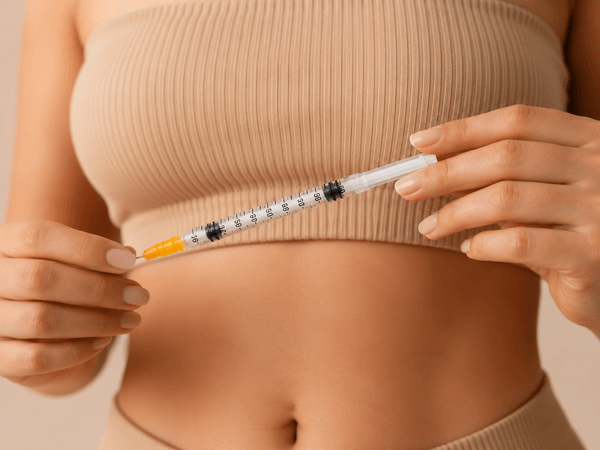
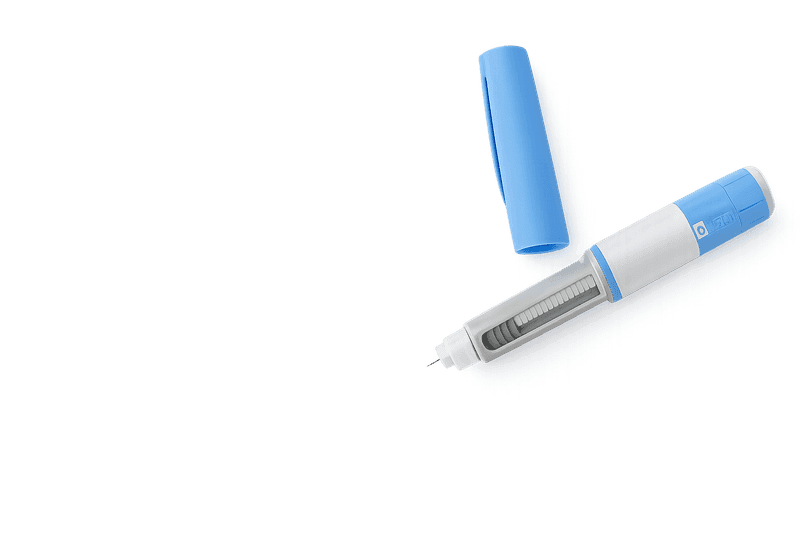
Woman getting a GLP-1 weight loss injection pen ready

What do trials show about lower doses of semaglutide?

Trials show that semaglutide's weight loss rises with dose: in a 52-week phase 2 dose-ranging trial, the lowest daily dose produced 6.0% average weight loss and the highest produced 13.8%, versus 2.3% on placebo (O'Neil et al., Lancet 2018, via AJMC). No semaglutide trial in our sources has reported weight-loss results for doses below Wegovy's 0.25 mg weekly starting dose.

That phase 2 trial is the closest thing to a semaglutide "low dose" study, and it is often misread. It randomized 957 adults with obesity and without diabetes to once-daily semaglutide at 0.05, 0.1, 0.2, 0.3 or 0.4 mg, liraglutide 3.0 mg, or placebo, with semaglutide escalated every 4 weeks to the target dose. Two details matter:

  • The doses were daily. Added up (our arithmetic from the trial design), they come to roughly 0.35 to 2.8 mg a week, so even the lowest arm received more than Wegovy's 0.25 mg weekly starting dose. That arithmetic is a rough comparison only: daily dosing produces a different drug-level pattern from weekly dosing, and the two are not proven equivalent.
  • Lower doses did less. Lipids, blood pressure and HbA1c improved at 0.2 mg a day or more, per ConscienHealth's review of the paper.

Semaglutide and liraglutide results by dose

Drug and doseTrial (population)DurationEstimandAverage weight change vs placebo
Semaglutide 0.05 / 0.1 / 0.2 / 0.3 / 0.4 mg dailyPhase 2 dose-ranging, n=957 (obesity, no diabetes) (AJMC)52 weeksNot stated in our source-6.0% / -8.6% / -11.6% / -11.2% / -13.8% vs -2.3%
Semaglutide 1.0 mg weeklySTEP 2, n=1,210 (type 2 diabetes) (Lancet 2021)68 weeksPrimary analysis as published; label not in our source-7.0% vs -3.4%
Semaglutide 2.4 mg weeklySTEP 2 (same trial)68 weeksSame as above-9.6% vs -3.4%
Semaglutide 2.4 mg weeklySTEP 1, n=1,961 (no diabetes) (NEJM 2021)68 weeksTreatment-policy-14.9% vs -2.4% (no lower-dose arm)
Oral semaglutide 25 mg daily (Wegovy pill)OASIS 4, n=307 (NEJM 2025)64 weeksTreatment-policy-13.6% vs -2.2%
Liraglutide 1.8 mg vs 3.0 mg dailySCALE Diabetes, n=846 (type 2 diabetes) (JAMA 2015)56 weeksNot stated in our source-4.7% (1.8 mg) and -6.0% (3.0 mg) vs -2.0%

STEP 2 is the only large semaglutide trial in our sources with a lower weekly dose side by side with 2.4 mg. It enrolled adults with type 2 diabetes, so its numbers should not be compared directly with STEP 1, which enrolled adults without diabetes. In STEP 2, 69% on 2.4 mg and 57% on 1.0 mg lost at least 5% of their weight, versus 29% on placebo. The older drug liraglutide shows the same direction: in SCALE Diabetes, 54.3% on 3.0 mg and 40.4% on 1.8 mg reached at least 5% loss, versus 21.4% on placebo.

For the Wegovy pill, OASIS 4 tested only the 25 mg maintenance dose; no published OASIS 4 data show what happens if people stay on the 1.5 mg or 4 mg starter tablets (NEJM 2025). Novo materials cite 16.6% versus 2.7%, which appears to be the trial-product estimand.

What the Wegovy label allows

The Wegovy injection label lists two maintenance doses for adult weight reduction, 2.4 mg (recommended) or 1.7 mg, and says the maintenance dose can be lowered if 2.4 mg is not tolerated. No trial result for 1.7 mg appears in the sources we checked, so we cannot give you a number for it. Meanwhile the approved range is moving up, not down: FDA approved Wegovy HD (7.2 mg weekly) on March 19, 2026.

Bottom line: lower semaglutide doses still work, but they work less, and every tested "low" dose is at or above a labeled starting dose. If a smaller semaglutide dose sounds right for you, the labeled 1.7 mg maintenance option is the place to start that conversation with your prescriber.

What do trials show about lower doses of tirzepatide?

In SURMOUNT-1, the lowest maintenance dose of tirzepatide (Zepbound 5 mg) produced 15.0% average weight loss at 72 weeks, versus 19.5% on 10 mg, 20.9% on 15 mg and 3.1% on placebo, under the treatment-regimen estimand (Jastreboff et al., NEJM 2022). So 5 mg is a real, effective dose, but it is a labeled maintenance dose, not a microdose.

SURMOUNT-1 enrolled 2,539 adults with obesity or overweight and without diabetes. Everyone started at 2.5 mg and stepped up to their assigned dose. No arm stayed on 2.5 mg, and no arm used anything smaller.

SURMOUNT-1 by dose (72 weeks)

Measure5 mg10 mg15 mgPlaceboSource
Weight change, treatment-regimen estimand (everyone randomized)-15.0%-19.5%-20.9%-3.1%NEJM 2022
Weight change, efficacy estimand (on treatment)-16.0%-21.4%-22.5%Not given in our sourceLilly, 2022
Lost 20% or more of body weightNot given in our source50%57%3%Healio
Nausea24.6%33.3%31.0%9.5%Lilly
Stopped because of adverse events4.3%7.1%6.2%2.6%Lilly

Two things stand out in the SURMOUNT-1 data. First, the step from 5 mg to 10 mg added about 4.5 points of average weight loss under the treatment-regimen estimand, while the step from 10 mg to 15 mg added about 1.4 points. Second, side effects did not keep rising in a straight line: nausea and adverse-event dropouts were lowest at 5 mg but slightly higher at 10 mg than at 15 mg (Lilly). Averages hide wide individual differences.

What the Zepbound label says about lower doses

The Zepbound label is explicit on two points, as summarized from the US prescribing information and PrescriberPoint:

  • The 2.5 mg dose is for starting treatment and is not a maintenance dose.
  • Maintenance doses for weight reduction are 5, 10 or 15 mg weekly, chosen by response and tolerability, and "if patients do not tolerate a maintenance dosage, a lower maintenance dosage should be considered." For obstructive sleep apnea, the maintenance dose is 10 or 15 mg.

In other words, a lower dose of tirzepatide is already built into the Zepbound label, with a floor of 5 mg for weight maintenance. Staying on 2.5 mg long term, or going below it, is outside what the label and the trials cover.

What this means for you: if you are on 10 or 15 mg and struggling with side effects, asking your prescriber about the 5 mg maintenance dose is a labeled, studied option. Expect somewhat less weight loss on average. If you are weighing tirzepatide against semaglutide more broadly, our tirzepatide vs semaglutide comparison lays out the head-to-head data.

Can a lower dose keep weight off after you lose it?

Yes, for one labeled dose: in the SURMOUNT-MAINTAIN trial, people who stepped down from 10 or 15 mg of tirzepatide (Zepbound) to 5 mg kept more weight off than people switched to placebo, but less than people who stayed on their higher dose (Horn et al., Lancet, May 2026). A separate trial, ATTAIN-MAINTAIN, found that switching from Wegovy or Zepbound to the Foundayo pill kept most prior weight loss.

How SURMOUNT-MAINTAIN worked

SURMOUNT-MAINTAIN enrolled 441 US adults in a 60-week open-label tirzepatide lead-in. At week 60, 378 people who had lost at least 5% of their weight and tolerated at least 10 mg were randomized 3:3:2 for 52 more weeks: 140 continued their maximum tolerated dose (MTD, 10 or 15 mg), 144 stepped down to 5 mg and 94 switched to placebo. The results were published online on May 12, 2026 and presented at ECO 2026.

Week-112 results: higher dose vs 5 mg vs placebo

MeasureStayed on MTD (10 or 15 mg)Stepped down to 5 mgSwitched to placeboSource
Weight change from start to week 112, as reported in The Lancet-21.9%-16.6%-9.9%Lancet via ACC
Difference vs placebo (Lancet)-12.0 points-6.6 pointsReferenceACC
Weight change to week 112, efficacy estimand (ECO 2026)-22.4%-17.0%-10.1%Medscape
Needed rescue tirzepatide (regained more than half of lost weight)8% (11/138)25% (35/142)67% (60/90)Lancet 2026
Stopped because of adverse events (maintenance period)0%0.7%0%Lilly, May 2026

Lilly said people who stayed on their maximum dose preserved all of their prior weight loss, while those who stepped down to 5 mg kept "all but 5.6 kg" on average under the efficacy estimand. One analysis described 5 mg as preserving about 70% of the higher-dose effect (Medscape). Lancet commentator André Scheen called 5 mg a "valuable alternative to discontinuation," and the authors noted that individual response "might vary," per Healio (May 14, 2026).

Three limits before you apply this to yourself

  • Rescue dosing. From week 84, anyone who regained more than half their lost weight could get rescue tirzepatide, and a quarter of the 5 mg group did (Lancet 2026). Part of the 5 mg result therefore reflects some people going back up.
  • Who was included. In SURMOUNT-MAINTAIN, everyone had already lost at least 5% and tolerated at least 10 mg for many months. The trial says nothing about starting low or never titrating up.
  • What was given. Five mg is an FDA-labeled maintenance dose delivered by branded pen or vial. SURMOUNT-MAINTAIN is not evidence for sub-labeled doses, compounded "units" or stretched intervals.

Switching to a pill: ATTAIN-MAINTAIN

Foundayo (orforglipron), a once-daily GLP-1 pill, was approved by FDA on April 1, 2026. In the 52-week ATTAIN-MAINTAIN trial, people switched from Wegovy or Zepbound to Foundayo or placebo. Those switching from Wegovy maintained 82.4% of their prior loss and those switching from Zepbound maintained 78.0%; in kilograms, the Wegovy group kept all but 0.9 kg and the Zepbound group all but 5.0 kg (Lilly, May 2026; Nature Medicine). Foundayo is a different drug at its own labeled doses, not a smaller dose of the injection. Our Foundayo vs Wegovy pill comparison covers how the two pills differ.

Compared with stopping

Stopping entirely leads to substantial regain in trials. In SURMOUNT-4, people switched to placebo after a 36-week tirzepatide lead-in regained 14.0% from week 36 to 88, while those who continued lost a further 5.5% (treatment-regimen estimand) (JAMA 2024). A BMJ meta-analysis published January 7, 2026 found weight rose by an average of 0.4 kg a month after weight-management drugs were stopped. Our guide to what happens when you stop a GLP-1 goes deeper. A labeled lower dose chosen with your prescriber has trial support as a middle path; a self-chosen fraction does not.

Is the starting dose of Ozempic or Wegovy a microdose?

No. The 0.25 mg starting dose of Ozempic or Wegovy (semaglutide) is the first step of a planned dose escalation, not a microdose and not a maintenance dose. The labels use it for 4 weeks to let your body adjust before the dose goes up, and the same is true of the 2.5 mg starting dose of Zepbound or Mounjaro (tirzepatide), which the Zepbound label says is for treatment initiation and is not a maintenance dose.

The Ozempic dosing page says the 0.25 mg dose for the first 4 weeks is meant to "help give your body a chance to get used to the medicine" before moving to 0.5 mg (Ozempic.com). Ozempic is approved for type 2 diabetes; Wegovy is the semaglutide product approved for weight management.

Labeled starting doses and what comes after them

The table below describes what each label sets out, so you can read your own prescription. It is not a dosing plan: your prescriber decides your doses and timing.

ProductLabeled starting doseWhat the label uses it forLabeled maintenance dose(s) for weightSource
Wegovy injection (semaglutide)0.25 mg weekly, weeks 1-4First step; then 0.5 mg, 1 mg and 1.7 mg at 4-week steps2.4 mg (recommended) or 1.7 mgWegovy label
Wegovy pill (oral semaglutide)1.5 mg daily, days 1-30First step; then 4 mg and 9 mg25 mg daily from day 91DailyMed
Ozempic (semaglutide, type 2 diabetes)0.25 mg weekly for 4 weeksGetting used to the medicine; then 0.5 mgNot approved for weight lossOzempic.com
Zepbound (tirzepatide)2.5 mg weeklyTreatment initiation only, not maintenance5, 10 or 15 mgZepbound label summary

Why the escalation exists

Dose escalation is the label's built-in tool for tolerability. The Wegovy label says that if a dose is not tolerated during escalation, the prescriber can consider delaying the next increase by 4 weeks. That is a supervised slowdown, decided by a clinician, using labeled doses.

Staying on a starter dose indefinitely is different. No trial in our sources (for example the semaglutide phase 2 trial or SURMOUNT-1) reports long-term weight results for people kept on 0.25 mg of semaglutide, 1.5 mg of the Wegovy pill or 2.5 mg of tirzepatide. Even the lowest phase 2 semaglutide arm added up to more than 0.25 mg a week, and every SURMOUNT-1 participant moved past 2.5 mg.

What this means for you: if you feel well and are losing weight on a starter dose, that is useful information to share with your prescriber, not a reason to stop escalating on your own. Ask what the label says about your next step, and whether delaying it or choosing a lower labeled maintenance dose makes sense for you.

Does microdosing reduce side effects?

Lower labeled doses of GLP-1s such as tirzepatide and semaglutide do cause somewhat less nausea and fewer side-effect dropouts in trials, so the idea behind microdosing for tolerability is plausible. But no trial has measured side effects at microdoses, and the benefit seen between labeled doses, for example in the Zepbound label, is modest, not dramatic.

Side effects are the main reason people say they microdose: 40.8% of microdosers in the Evidation ISPOR 2026 survey cited side-effect management (self-reported). Here is what labels and trials show about dose and gut side effects.

Gastrointestinal side effects by labeled dose

Drug and dataLower doseHigher dose(s)PlaceboSource
Zepbound, nausea (pooled SURMOUNT-1 and -2, label)25% (5 mg)29% (10 mg), 28% (15 mg)8%Zepbound label
Zepbound, stopped for GI adverse reactions (label)1.9% (5 mg)3.3% (10 mg), 4.3% (15 mg)0.5%Zepbound label
Semaglutide, any adverse event (STEP 2, type 2 diabetes)81.8% (1.0 mg)87.6% (2.4 mg)Not given in our sourceLancet 2021
Wegovy, nausea (adult trials, label)Not reported by dose44% (Wegovy)16%Wegovy label
Semaglutide 2.4 mg, stopped for GI events (STEP 1)No lower-dose arm4.5%0.8%NEJM 2021
Liraglutide, GI disorders (SCALE Diabetes)Less frequent (1.8 mg)More frequent (3.0 mg)Less frequentJAMA 2015

What that data does and does not imply

  • The gap is modest. On Zepbound, nausea was 25% at 5 mg versus 28% to 29% at the higher doses, per the label. A lower labeled dose still carried roughly three times the nausea rate of placebo.
  • Nausea is not what causes the weight loss. A pooled analysis of SURMOUNT-1 to -4 found GI adverse events were "minimally related" to the weight reduction achieved with tirzepatide (Rubino et al., Diabetes Obes Metab 2025). Feeling less sick on a tiny dose does not prove the dose is working.
  • Rare serious risks may not shrink with dose. One clinician quoted by Yahoo Health argues that "GLP-1 risks are generally not dose dependent," referring to problems such as pancreatitis and gallbladder disease. That is an opinion, not a trial finding, but no trial shows those risks disappear at microdoses either. Cedars-Sinai lists gallbladder disease, pancreatitis, thyroid conditions, retinopathy and nutrient deficiencies among the risks of unsupervised GLP-1 use.
  • Self-adjusted dosing adds its own risks. FDA has received reports of overdoses, some needing hospital care, linked to confusion between milligrams, milliliters and "units" with compounded semaglutide (FDA, July 2024). A plan meant to reduce side effects can cause severe ones if the measurement goes wrong.

What to do instead: the labels already give your prescriber tools for side effects, including slower escalation and lower maintenance doses. For a fuller list of side effects and warning signs, read our GLP-1 side effects and risks guide.

What about microdosing for longevity, inflammation or 'food noise'?

No randomized trial in humans has reported results showing that microdosed semaglutide, tirzepatide or any GLP-1 slows aging, lowers inflammation, extends life or quiets "food noise," as of November 2, 2026. Companies sell low-dose GLP-1s for these goals, but Science News reported that "there's scant published research on GLP-1 microdosing."

Longevity and aging

  • One registered human trial, no results. AgelessRx sponsors NCT07092605, described on the registry as a blinded, randomized, placebo-controlled trial of microdosed semaglutide on health, quality-of-life and longevity measures in healthy adults. Its registry status is unclear and no results have been posted (Section 11 has details).
  • Mouse data. A mouse study published in Nature reported that starting semaglutide in old age extended lifespan by about 12% (Scientific American, 2026). Mouse results often fail to carry over to people, and the study says nothing about human microdoses.
  • Standard-dose epigenetic data. A post hoc analysis of a 32-week trial in people with HIV-associated fat changes reported slower "epigenetic aging" on semaglutide (PubMed 40791720). Participants were titrated to the standard 1.0 mg weekly dose, not a microdose, and aging was not the trial's main goal, so it is not evidence for microdosing.

Inflammation and heart health

The proven cardiovascular benefit of semaglutide comes from the SELECT trial, which used semaglutide 2.4 mg weekly, the full Wegovy maintenance dose. No outcome trial supports a heart or anti-inflammatory benefit from microdoses. When the STEP 1 extension stopped full-dose semaglutide, most cardiometabolic improvements drifted back toward baseline by week 120 (Diabetes Obes Metab 2022), which suggests the benefits depend on ongoing, effective treatment rather than a small background dose.

"Food noise"

Many people describe GLP-1s as quieting constant thoughts about food. That experience is common in personal accounts, but no trial in our sources has measured "food noise" at microdoses, and no human randomized trial of microdosing has reported any results at all. A low dose that seems to help your cravings is worth mentioning to your prescriber, but it is not proof of an effect.

Who these programs are aimed at

Some longevity-focused programs are marketed to people who would not qualify for a GLP-1 under its FDA-labeled weight indication. If you do not have obesity or a weight-related condition, you would be taking a prescription drug with known risks, often in compounded form, for benefits no human trial has shown. Yale's Reshma Ramachandran told STAT that patients in these programs are "guinea pigs, both on the efficacy side and the safety side."

What this means for you: treat longevity and anti-inflammatory microdosing claims as unproven. If results from a properly run human trial appear, they will be news, and we will update this guide.

Which clinical trials are testing GLP-1 microdosing?

As of November 2, 2026, two registered studies on ClinicalTrials.gov are tied to microdosing semaglutide or tirzepatide: NCT07092605, a planned randomized trial sponsored by AgelessRx whose status is unclear, and NCT07588984, an observational cohort study, not a randomized trial. Neither has posted results, and both are sponsored by companies that sell GLP-1 programs (NCT07092605; NCT07588984).

No human randomized trial of GLP-1 microdosing has reported results. Two further registered trials (NCT07783854 and NCT07859176) study tapering semaglutide doses, either as a maintenance regimen or as a way of stopping, which is related to but not the same as microdosing.

Registered studies relevant to low-dose GLP-1 use (as of November 2, 2026)

Registry IDWhat it studiesDesignSponsorStatus and results
NCT07092605Microdosed semaglutide (sublingual and injected) vs placebo on health, quality of life and longevity measures in healthy adults 18-65, for up to about 6 monthsDescribed as blinded, randomized, placebo-controlled, decentralized by telemedicineAgelessRx (sells low-dose GLP-1s)Registry status unclear; no results posted
NCT07588984FLOURISH and THRIVE: GLP-1 medication (semaglutide, tirzepatide) plus behavioral programs, weight and metabolic outcomesObservational prospective cohort, not randomizedA digital weight-loss company that sells GLP-1 programsNo results posted
NCT07783854Semaglutide dose-tapering regimen for keeping weight offOpen-label, non-inferiority randomized trialUnion Hospital, Tongji Medical College (Wuhan, China)Not yet recruiting; estimated start Sept 1, 2026; primary completion Dec 30, 2027
NCT07859176Tapered vs abrupt stopping of semaglutide after treating recurrent weight gain or suboptimal response following bariatric surgeryComparison of tapered and abrupt discontinuationNot retrievedStatus not retrieved; no results found

Why the AgelessRx trial's status is unclear

Different sources describe NCT07092605 differently. A registry mirror lists it as "Early Phase 1" with an estimated 150 participants and "invitation-only" status (Veeva CTV), while other reports conflict on whether it has enrolled at all. We could not confirm its current status, so check the ClinicalTrials.gov record yourself before relying on any claim that it is "ongoing" or "complete." What is clear: no results have been posted. AgelessRx refers to it as ALRx010 and describes it as randomized and placebo-controlled (AgelessRx).

Why the second study cannot settle the question

NCT07588984 follows people who are already in a company's GLP-1 programs. Without randomization, people who choose one program may differ from people who choose another in ways that affect weight, so an observational cohort can describe outcomes but cannot prove that a lower dose caused them. The registry also lists individual participant data sharing as "No."

How to read future results: look for randomized, placebo-controlled designs, peer-reviewed publication rather than a press release, and the exact product tested. Results for one company's sublingual semaglutide would not automatically apply to another pharmacy's compounded injection.

What do doctors and medical groups say about microdosing?

Obesity specialists and medical groups that have spoken publicly do not support microdosing GLP-1s such as semaglutide or tirzepatide outside of supervised, labeled dosing. The president of the American Association of Clinical Endocrinology (AACE) said in October 2025 that AACE "does not support the routine use of microdosing GLP-1RA medications in clinical care" (AACE), and an Obesity Medicine Association working group found "little to no peer-reviewed evidence" for it (Obesity Pillars, 2026).

Knowing what kind of statement each view is helps, because an interview quote, a working-group perspective and a formal guideline carry different weight.

Positions on GLP-1 microdosing (as of November 2026)

WhoWhat they saidType of statementSource
AACE (Scott D. Isaacs, MD, president)Does "not support the routine use of microdosing"; recommends adherence to FDA-approved dosingInterview quote from AACE's president, Oct 2025; not a formal position paperPharmaceutical Technology
Obesity Medicine Association, Access and Policy Working Group"Little to no peer-reviewed evidence" for the safety or effectiveness of microdosed regimens; concerns about safety, efficacy, oversight and non-medical useWorking-group perspective in Obesity Pillars (2026)Obesity Pillars
Jody Dushay, MD (Beth Israel Deaconess, Harvard Medical School)"Microdosing GLP-1s is not a thing"; no legitimate long-term data support itOp-ed, STAT First Opinion, May 29, 2026STAT
Amanda Velazquez, MD (Cedars-Sinai)No evidence low-dose, intermittent use gives meaningful or sustained weight loss; avoid unsupervised use at any doseHealth-system expert article, 2026Cedars-Sinai
Judith Korner, MD (NewYork-Presbyterian)Taking GLP-1s at self-chosen doses "on your own is not safe"Health-system articleNewYork-Presbyterian
Reshma Ramachandran, MD (Yale)Patients in microdose programs are "guinea pigs"News interview, Nov 2025STAT
Kiran Khanani, PharmD (Optum)Lower dosing "can be safe" if done on a doctor's recommendation and under supervisionPharmacist blog; the moderate end of opinionOptum Perks

Hackensack Meridian Health endocrinologist Ritu Anand, MD, DABOM, warns that the effects of microdosing "have not been clinically tested" and that these doses are not FDA approved, and the health system's summary of survey data says nearly half of microdosers had not consulted a doctor before changing their dose (Hackensack Meridian Health, May 12, 2026).

Groups with no formal statement

We found no formal public statement on microdosing from The Obesity Society, the American Society for Metabolic and Bariatric Surgery (ASMBS), the Endocrine Society or the American Diabetes Association as of November 2026. Existing joint guidance from The Obesity Society and partner groups addresses labeled dosing only. Silence is not endorsement; it means these groups have not weighed in formally. We also found no Cleveland Clinic or Mayo Clinic page specifically on GLP-1 microdosing, so we do not attribute a position to either.

Where doctors differ

Clinicians agree that microdosing as marketed is untested and that self-directed dose changes are risky. The difference is tone. Some clinicians reject the idea outright; others, such as the Optum pharmacist, accept that a lower dose can be appropriate for some people when a doctor recommends and monitors it. On stepping down to a labeled dose, Lancet commentator André Scheen described a 5 mg tirzepatide maintenance dose as a "valuable alternative to discontinuation" (Healio, May 2026).

What this means for you: if your prescriber suggests a lower labeled dose, that is in line with expert opinion. If a website or influencer suggests a self-measured fraction, the experts above are close to unanimous that you should not do it on your own.

Why do some telehealth companies sell 'microdose' plans?

Telehealth companies sell "microdose" GLP-1 plans because there is demand from people worried about side effects and cost, and because compounded semaglutide and tirzepatide can be made in amounts that FDA-approved pens do not offer. These plans almost always use compounded drugs, which are not FDA-approved and are not generic versions of Wegovy, Ozempic or Zepbound, and no trial has shown that the low-dose versions work.

How these plans came about

In November 2025, STAT reported that several telehealth companies, including Found and Hims & Hers, had launched "microdosed" GLP-1 programs in the previous three months, under the headline that microdosing aims to extend the life of the GLP-1 compounding market. The Obesity Medicine Association working group notes that fractional doses are "not available in FDA-approved pens," so they usually depend on compounded products (Obesity Pillars, 2026). Commentators describe 503A pharmacies, which compound for individual patients with a documented clinical need, as the legal route "personalized" low-dose offerings rely on; that is a legal interpretation, not FDA wording.

Regulators are watching this market

  • On February 6, 2026, FDA said it intends to take "decisive steps" to restrict GLP-1 ingredients used in mass-marketed compounded drugs (CNBC).
  • On March 3, 2026, FDA announced 30 warning letters to telehealth companies over false or misleading claims about compounded GLP-1s, such as implying they are equivalent to approved drugs (Patient Care Online). About 25 more followed in June 2026 (Sheppard Mullin).
  • On April 30, 2026, FDA proposed keeping semaglutide, tirzepatide and liraglutide off the 503B bulks list, which would bar large-scale compounding by outsourcing facilities; the proposal was not final as of late October 2026 (Medscape).
  • As of May 31, 2026, FDA had received 990 adverse event reports tied to compounded semaglutide and more than 730 tied to compounded tirzepatide, and says the true numbers are likely higher (FDA). In September 2026, a pharmacy recalled 22 lots of compounded tirzepatide for "lack of assurance of sterility" (Boston Globe).

For the quality and regulatory differences, see compounded semaglutide vs brand-name.

Providers we review that list microdose options

ProviderWhat it listsPublished price for the microdose optionWhat we can and cannot say
bmiMDCompounded semaglutide and tirzepatide, including "microdose versions" of bothNone advertised; plan pricing shows at checkoutThe offering exists; we have no data on outcomes for its microdose versions
welludr"GLP-1 plus NAD+/B12 microdose"Not published separately in our dataNo trial supports adding NAD+ or B12 to a GLP-1 microdose for weight loss

Listing these options is not a recommendation of the microdose plans, and not evidence that they work.

A lower dose may not cost you less

Several compounded providers in our price index charge the same monthly price at every dose. As of our October 2026 price check, altRx lists compounded semaglutide at $89 and tirzepatide at $149 a month "flat at every dose," DirectMeds lists both at $147 "flat at every dose," and TrimRx lists semaglutide at $149 "same price at every dose" (cheapest GLP-1 prices). On plans like these, taking less medicine does not lower your bill. Brand-name Wegovy pens are similar: NovoCare's self-pay price is $349 a month for every dose from 0.25 to 2.4 mg. A later section works through the full cost math.

Before you sign up for any microdose plan, ask: which drug and which pharmacy makes it, whether it is compounded, how the dose is written (milligrams, not just "units"), who decides dose changes, and whether a labeled option would meet the same goal. Our guide on how to choose a GLP-1 provider covers what to check.

Lowest-priced GLP-1 plans

The cheapest published plans, sorted from lowest price, with the terms listed under every price.

Is it safe to microdose a GLP-1 on your own?

No randomized trial has tested whether self-directed microdosing of a GLP-1 such as semaglutide or tirzepatide is safe, and the best-documented risks come from the method rather than the small dose: measuring errors with compounded vials, reusing leftover medicine, stopping and restarting without re-titration, and buying outside your own clinician's care. Cedars-Sinai's obesity specialists say that "everyone should avoid self-directed or unsupervised use of GLP-1 medications, no matter the dose" (Cedars-Sinai, 2026).

A smaller dose feels safer, and for nausea that is partly right. Section 9 explains why that does not extend to rarer serious risks such as pancreatitis and gallbladder disease, which no study has shown to disappear at tiny doses.

Supervision is often missing. As section 4 shows, in self-reported Evidation survey data active microdosers were less likely than other users to get their GLP-1 from their own clinician, and many decided to microdose on their own.

The table below ties each risk of self-adjusted dosing to what the FDA, a drug label or a regulator has actually documented, as of November 2026.

RiskWhat can go wrongWhat the official record saysSource
Confusing milligrams, milliliters and "units"Injecting several times the intended amountFDA warned on July 26, 2024 of overdoses with compounded semaglutide, some needing hospital care. Its examples: a patient told to draw 5 units injected 50 units (tenfold), and a prescriber meaning 0.25 mg wrote 25 units instead of 5 (fivefold), causing severe vomiting.FDA alert, July 2024
Saving leftover medicine from a single-dose vialContamination; an unknown doseThe Zepbound vial carton reads "Discard unused portion." STAT notes that drawing less than a full vial is unstudied and reuse risks contamination.Zepbound label; STAT
Using what is left in a multi-dose penAn uncontrolled extra dose after the labeled doses run outThe Zepbound KwikPen instructions say to discard the pen after 4 doses or 30 days "even if there is medicine left in it," and not to inject leftover medicine.Lilly KwikPen IFU
Stopping and restarting without a planRestarting at a dose your body is no longer used toThe Wegovy label says that if 2 or more consecutive doses are missed, the prescriber should consider reinitiating dose escalation at a lower dose.Wegovy prescribing information
Unapproved products and ingredientsWrong ingredient, poor storage, doses outside any labelFDA flags products prescribed beyond labeled doses, storage problems during shipping and unapproved salt forms. As of May 31, 2026 it had 990 adverse event reports for compounded semaglutide and more than 730 for compounded tirzepatide, and says true numbers are likely higher.FDA concerns page
Sterility of compounded vialsContaminated medicineApothecary Pharma recalled 22 lots of compounded tirzepatide multi-dose vials on Sept 24, 2026 for "lack of assurance of sterility" (FDA Class II; no illnesses reported).Boston Globe, Oct 21, 2026

What this means for you: a lower dose a clinician prescribes and monitors is not the same as one you choose from social media. NewYork-Presbyterian's Judith Korner, MD, says taking GLP-1s at self-chosen doses "on your own is not safe" (NewYork-Presbyterian). For the full picture of GLP-1 side effects at any dose, see our guide to GLP-1 side effects and risks in 2026.

Can you split a Wegovy or Zepbound pen or vial?

No FDA-approved label for Wegovy or Zepbound allows splitting a dose: every US Wegovy pen and every Zepbound single-dose vial holds one fixed weekly dose, and the Zepbound KwikPen delivers four fixed doses and then blocks further injections. Taking part of a dose, or keeping leftover semaglutide or tirzepatide for later, is outside the label for every approved GLP-1, and this guide does not describe how people do it.

The rules differ by product. The table summarizes what each US label or instruction leaflet says, as of November 2026.

Product (US)FormatWhat the label says about leftover medicineSource
Wegovy penPrefilled, disposable, single-dose pen with a built-in needle; cartons of 4Discard the pen after use. (In the UK and EU, Wegovy uses a different 4-dose FlexTouch pen, so advice written for it does not apply here.)Wegovy prescribing information
Wegovy HD (approved March 19, 2026)Single-dose pen, 7.2 mg in 0.75 mLOne fixed dose per penNovo Nordisk, Mar 19, 2026
Zepbound single-dose vialOne weekly dose per vial; cartons of 4The carton reads "Discard unused portion." Using leftover solution for a later dose is outside the label.Zepbound label via Drugs.com
Zepbound KwikPen (self-pay launch Feb 23, 2026)Single-patient-use pen with 4 fixed weekly doses (one month)Discard after 4 doses or 30 days after first use, "even if there is medicine left in it." The pen blocks dosing after the fourth injection.Lilly KwikPen IFU
Ozempic penSingle-patient-use, multi-dose pen with fixed dose settings selected by dialThe pen must never be shared, and the needle is discarded after each injection. Only the labeled dose settings are approved.Ozempic label reproduction

The online practice of "clicking" a multi-dose pen to a partial setting, or drawing a partial amount from a vial, is not a labeled dosing method for any approved GLP-1: the labels specify fixed doses only. SingleCare warns that so-called "golden dose" tricks with leftover pen contents can cause overdoses and infection (SingleCare).

People do it anyway, often for cost; section 4 covers Reuters' reporting on patients stretching doses to stay on Wegovy and Zepbound. Hackensack Meridian Health notes social media posts describing stretching a Zepbound supply by an extra week or two (Hackensack Meridian, May 12, 2026). Those reports describe behavior, not evidence of safety.

What to do instead: if cost is the reason, see the price math two sections down. If side effects are the reason, both the Wegovy and Zepbound labels already allow a lower maintenance dose when a higher one is not tolerated (section 20). Either way, your prescriber can write a prescription for the product and strength that fits.

What happens if you stop and restart a GLP-1?

When people stop semaglutide or tirzepatide, most of the lost weight returns on average: a 2026 meta-analysis estimated that 60% of weight lost on GLP-1 drugs is regained within a year of stopping, and restarting after two or more missed Wegovy doses may mean climbing the dose ladder again. On-and-off "microdosing" cycles combine both problems, and no trial has tested them (eClinicalMedicine 2026).

Here is what the labels tell prescribers about gaps; these are summaries, not self-care instructions.

DrugMissed single dose (label)Longer gapSource
Zepbound and Mounjaro (tirzepatide)Can be taken within 4 days (96 hours); after that, skip it and take the next dose on the regular dayExact label wording on restarting after several missed weeks was not confirmed; secondary sources conflict, so ask your prescriberLabel summaries
Wegovy injection (semaglutide)Take it if the next scheduled dose is more than 2 days away; skip it if less than 2 days awayIf 2 or more consecutive doses are missed, consider reinitiating dose escalation at a lower doseWegovy prescribing information

Escalation exists because stomach side effects are worst when the body is not used to the drug. The Wegovy label already allows a prescriber to delay the next increase by 4 weeks if a dose is not tolerated during escalation (Wegovy label, 2025). Restarting at a dose last taken weeks ago skips that protection.

The regain data below come from stopping full doses; none tested a microdose.

StudyWhat happened after stoppingEstimand or designSource
STEP 1 extension (semaglutide 2.4 mg stopped at week 68)Regained 11.6 percentage points by week 120 (placebo: 1.9), about two-thirds of the prior 17.3% loss; net loss 5.6% from baselineExploratory, n=327Diabetes Obes Metab 2022
STEP 4 (semaglutide 2.4 mg, switched to placebo at week 20)Weeks 20 to 68: -7.9% if continued vs +6.9% on placeboTreatment-policy (trial-product: -8.8% vs +6.5%)JAMA 2021
SURMOUNT-4 (tirzepatide, switched to placebo at week 36)Placebo group regained 14.0% from week 36 to 88; continuers lost a further 5.5%. Week 0 to 88: -25.3% vs -9.9%Treatment-regimen (efficacy estimand: further 6.7%)JAMA 2024
BMJ meta-analysis (37 studies, about 9,300 adults)Weight rose about 0.4 kg a month after weight-management drugs stopped, about 0.3 kg a month faster than after behavioral programs endedSystematic review; mean follow-up 32 weeksOxford, Jan 8, 2026
eClinicalMedicine meta-regression (6 RCTs, 3,236 people)60% of lost weight regained within 1 year; regain plateaus at 75.3%; half-life 23.0 weeksNonlinear modeleClinicalMedicine 2026

The health markers follow the scale. In the STEP 1 extension, most cardiometabolic improvements drifted back toward baseline by week 120 (Wilding 2022), and a post hoc analysis of SURMOUNT-4 found improvements reversed in proportion to weight regained (JAMA Internal Medicine 2025). A BMJ model projected a return to baseline weight about 1.7 years after stopping (News-Medical, Jan 13, 2026), a projection rather than an observed result.

Many people who microdose are already heading toward the exit. In the ISPOR 2026 analysis of Evidation survey data, 51.0% of current microdosers expected to stop GLP-1 treatment within one year (ISPOR 2026). If your plan is really a slow way of stopping, say so to your prescriber, and read our guide on what happens when you stop GLP-1 medication.

Does microdosing a GLP-1 save money?

Usually not, as of November 2026: NovoCare charges $349 a month for every Wegovy pen dose from 0.25 mg to 2.4 mg, and several compounded semaglutide and tirzepatide providers charge one flat price at every dose, so a smaller dose of either costs the same. The exception is brand-name Zepbound, where LillyDirect charges less for lower doses, and the 5 mg maintenance dose costs $50 a month less than 7.5-15 mg (NovoCare; Lilly, Dec 1, 2025).

Cost is a real reason people microdose. In the ISPOR 2026 abstract, 31.9% of microdosers cited cost (ISPOR 2026), and in KFF's November 2025 poll, 56% of GLP-1 users said the drugs were difficult to afford and 14% had stopped because of cost (KFF, Nov 14, 2025).

Brand-name self-pay prices by dose

The year columns show 12 monthly fills and, because pens and vials come four weekly doses to a carton, the 13 cartons that 52 weekly doses actually take.

Product and doseMonthly self-pay price12 fills13 fills (52 weekly doses)Saving vs that product's top tier
Wegovy pen 0.25 mg to 2.4 mg$349 (every dose)$4,188$4,537$0 at any lower dose
Wegovy HD 7.2 mg$399$4,788$5,187n/a (top tier)
Zepbound 2.5 mg (starter dose, not a maintenance dose)$299$3,588$3,887$150 a month vs $449
Zepbound 5 mg (labeled maintenance dose)$399$4,788$5,187$50 a month, $600 over 12 fills
Zepbound 7.5 mg to 15 mg (refilled within 45 days)$449$5,388$5,837n/a (top tier)
Wegovy pill 1.5 mg (first 30 days of titration)$149$1,788n/a$150 a month vs $299
Wegovy pill 9 mg or 25 mg$299$3,588n/an/a (top tier)

Sources: Wegovy pen and HD from NovoCare's price guide; Zepbound prices from Lilly's Dec 1, 2025 release and LillyDirect (45-day refill rule; KwikPen and vial priced alike per Lilly, Feb 23, 2026); Wegovy pill from CNN, Jan 6, 2026. Late Zepbound refills cost more.

Two discounts lower first-year costs at any dose. New Wegovy self-pay patients pay $199 a month for their first two fills of the 0.25 mg and 0.5 mg pens, an offer valid through Dec 31, 2026 (NovoCare). Over 12 fills that is 2 x $199 plus 10 x $349, or $3,888, which is $300 less than $4,188. Foundayo, Lilly's daily GLP-1 pill, starts at $149 a month, and through Dec 31, 2026 Lilly has cut the 2.5 mg dose to $149 and the 5.5 mg dose to $199 (Lilly Foundayo savings page).

Compounded providers: one price at every dose

Providers in our price index that publish a flat price charge the same at any prescribed dose. These compounded drugs are not FDA-approved and are not generic Wegovy or Zepbound.

Provider (compounded)Semaglutide per monthTirzepatide per monthPricing rule12 months at that priceSaving from a lower dose
altRx$89 sale (reg. $199)$149 sale (reg. $299)Flat at every dose$1,068 / $1,788 at sale prices$0
DirectMeds$147$147Flat at every dose$1,764 for either drug$0
TrimRx$149 ($140 discount applied)$259Semaglutide: same price at every dose$1,788 for semaglutide$0 on semaglutide

Prices are from our GLP-1 price index, last fully verified October 16, 2026, and sale prices can end without notice. bmiMD offers microdose versions of compounded semaglutide and tirzepatide but publishes no headline price. welludr lists a "GLP-1 plus NAD+/B12 microdose," and its Pre-Black Friday sale from Oct 28, 2026 starts compounded semaglutide "from $41" and tirzepatide "from $71" a month; check the plan terms behind those sale prices before you pay.

The bottom line on money: on Wegovy pens and on flat-priced compounded plans, a smaller dose saves $0. On Zepbound, staying at the labeled 5 mg maintenance dose instead of 7.5-15 mg saves $50 a month, or $600 over 12 fills, if your prescriber agrees 5 mg works for you (section 20). The cheapest brand-name prices attach to starter doses, not doses meant for long-term use. For other ways to cut the bill, see our guide on how to pay less for GLP-1s in 2026.

Is microdosing compounded semaglutide riskier than brand-name?

Yes, on the evidence available: compounded semaglutide and tirzepatide are not FDA-approved, the FDA has documented overdoses tied to compounded vials measured in "units," and most microdose plans depend on compounded products because doses below the approved strengths are not available in FDA-approved pens. The Obesity Medicine Association's Access and Policy Working Group makes that last point in its 2026 perspective statement (Obesity Pillars 2026).

Compounded products are a large share of the microdosing world. Evidation's December 2025 release found that about half of microdosers reported using compounded GLP-1 versions (Evidation, Dec 16, 2025), compared with 19% of all current GLP-1 users in Gallup's 2026 survey who use a compounded or "custom-mixed" version, with another 12% unsure which kind they take (Gallup via Becker's, July 2026). Evidation's figure is self-reported; Gallup used a probability-based panel.

QuestionBrand-name Wegovy, Zepbound, OzempicCompounded semaglutide or tirzepatide
FDA review before saleYes, approved for safety, effectiveness and qualityNo. FDA does not review compounded GLP-1s before marketing (FDA, Mar 3, 2026)
How the dose is setFixed labeled strengths in pens or vialsOften a multi-dose vial measured in "units" that do not map onto approved doses (STAT, May 29, 2026)
Documented dosing errorsLabels specify fixed dosesFDA's July 2024 alert describes fivefold and tenfold overdoses (FDA)
Adverse event reportingLabels list side-effect rates from controlled trials990 reports for semaglutide and 730+ for tirzepatide as of May 31, 2026; some pharmacies are not required to report (FDA)
Legal pathway in 2026Standard prescriptionPatient-specific 503A compounding with a documented clinical need; mass compounding under review (see below)

FDA declared the tirzepatide shortage resolved on Oct 2, 2024 (McDermott) and the semaglutide shortage resolved on Feb 21, 2025 (McDermott). Since then, compounding pharmacies may not routinely make "essentially copies" of approved GLP-1s; 503A pharmacies may compound for an individual patient with a documented clinically significant difference, such as a different dose (Health Law Alliance). "Personalized" microdose offers rely on that route. Our explainer on 503A vs 503B pharmacies covers the difference.

On Feb 6, 2026, FDA said it would take "decisive steps" to restrict GLP-1 ingredients used in mass-marketed compounded drugs (CNBC, Feb 6, 2026). On March 3, 2026 it announced warning letters, dated Feb 20, to 30 telehealth companies over misleading claims (FDA), and more letters followed in June 2026, such as one to Altru Telehealth dated June 8 (FDA warning letter). On April 30, 2026, FDA proposed leaving semaglutide, tirzepatide and liraglutide off the 503B bulks list, which would bar outsourcing facilities from large-scale compounding of them (FDA, Apr 30, 2026). The proposal does not apply to 503A pharmacies, and no final decision had been announced in the latest reports (Orrick).

None of this means every compounded prescription is unsafe. It does mean a compounded microdose stacks two unknowns: a dose no trial has tested and a product FDA has not reviewed. If you take a compounded GLP-1, ask your provider which pharmacy makes it, whether it is the same molecule as the approved drug rather than a salt form, and exactly how your dose is measured. Our comparison of compounded semaglutide vs brand-name goes deeper.

How is microdosing different from tapering off a GLP-1?

Tapering a GLP-1 means stepping semaglutide or tirzepatide down over a set period, usually after reaching a goal weight, with the aim of stopping or settling on a lower maintenance dose; microdosing usually means staying on a dose below the labeled range with no end point. As of November 2026, no randomized trial of either has reported results (ClinicalTrials.gov).

The most-cited taper data come from Embla, a Danish digital weight clinic. In a retrospective analysis of 2,246 semaglutide patients presented at the European Congress on Obesity in May 2024, 353 began tapering after reaching their target weight, over an average of about 9 weeks, and lost a further 2.1% during the taper. Of 240 who tapered to zero, the 85 with data 26 weeks later were reported as weight-stable (EurekAlert, May 2024). That is 85 of 240 people, or about 35%, with follow-up data, so most of the group is missing from the result.

Later reporting added that 46 of the 240 restarted semaglutide after regaining an average of 1.3%, and that Embla patients used about one-third of the semaglutide of the standard schedule, which the authors called "just as effective" (medRxiv meta-regression citing Seier et al.). That works out to about 19% of the tapered-to-zero group restarting. Keep the source in view: a commercial clinic's unpublished, retrospective, non-randomized data, with no control group.

ApproachGoalBest evidence as of November 2026Evidence type
Tapering to stopCome off the drug with less regainEmbla retrospective data (above); no randomized resultsObservational, conference abstract
Randomized taper trialTest a taper regimenNCT07783854 (Union Hospital, Wuhan): "not yet recruiting"; primary completion estimated Dec 30, 2027Registered, no results
Tapered vs abrupt stop after bariatric surgeryCompare two ways of stoppingNCT07859176 (registry)Registered, no results
Step down to a labeled lower doseKeep weight off on less drugSURMOUNT-MAINTAIN: tirzepatide 5 mg after full titration (section 7)Randomized trial
Switch to a pillKeep weight off on a different drugATTAIN-MAINTAIN: Wegovy or Zepbound to Foundayo (section 7)Randomized trial
Microdosing below labeled dosesOpen-ended low-dose useNo reported randomized resultsNone

The case for being careful about any step-down is how quickly weight returns once exposure drops; sections 7 and 16 give the trial and meta-analysis figures. Whether a slow step-down beats an abrupt stop is what NCT07783854 and NCT07859176 aim to find out.

What this means for you: if you are thinking about reducing your dose because you have reached your goal, call it what it is, a taper or a maintenance question, and plan it with your prescriber. Labeled lower maintenance doses exist for both Wegovy and Zepbound, and they have better evidence behind them than any self-designed taper.

Who might consider a lower GLP-1 dose with their doctor?

A lower dose of semaglutide or tirzepatide, chosen with a prescriber, has label or trial support in three situations: when a higher dose is not tolerated, when someone who has lost weight needs a maintenance plan, and when a slower climb through the starting doses would help. The Wegovy label lists 1.7 mg as an alternative maintenance dose to 2.4 mg, and the Zepbound label says "if patients do not tolerate a maintenance dosage, a lower maintenance dosage should be considered" (Wegovy on DailyMed; Zepbound label summary).

Cedars-Sinai draws the line clearly: supervised use of lower doses of FDA-approved GLP-1s "as part of a titration strategy" is a different thing from "the microdosing strategies you see trending online" (Cedars-Sinai). Optum pharmacist Kiran Khanani, PharmD, says lower dosing "can be safe" on a doctor's recommendation and under supervision (Optum Perks).

SituationWhat the label or trial supportsLimitsSource
Side effects during the dose climbWegovy: consider delaying the next increase by 4 weeksA delay, not a permanent low doseWegovy label
Wegovy 2.4 mg not toleratedLower the maintenance dose; 1.7 mg is a labeled maintenance dosePrescriber decisionDailyMed
Wegovy 25 mg tablet not toleratedConsider switching to the 1.7 mg weekly injectionPrescriber decisionDailyMed
Zepbound maintenance dose not toleratedConsider a lower maintenance dose (5, 10 or 15 mg are labeled for weight reduction)2.5 mg is for starting only, not maintenanceZepbound label summary
Keeping weight off after loss on tirzepatideSURMOUNT-MAINTAIN: stepping down to 5 mg kept much of the lossOnly after full titration and tolerating at least 10 mgLancet 2026
Wanting off injections after lossATTAIN-MAINTAIN: switching to Foundayo kept most of the lossA different drug, not a lower doseNature Medicine 2026

SURMOUNT-MAINTAIN and ATTAIN-MAINTAIN. Section 7 covers both trials in detail, including the Lancet-reported and efficacy-estimand week-112 figures for SURMOUNT-MAINTAIN and the rescue dosing that affects its 5 mg result. The key limit for this section: 5 mg is an FDA-labeled maintenance dose given by branded pen or vial after full titration, so the trial says nothing about sub-labeled doses, compounded "units" or starting low and staying low. ATTAIN-MAINTAIN is evidence for switching to a different drug, not for a microdose.

Who should not microdose a GLP-1?

Several groups should not try GLP-1 microdosing on their own: people who do not meet the labeled criteria for semaglutide or tirzepatide, people taking a GLP-1 for type 2 diabetes, heart disease or sleep apnea, people without a prescriber who knows their full history, and anyone buying medicine without a prescription.

WhoWhy a self-chosen low dose is a poor fitSource
People below the labeled weight criteriaWeight-loss GLP-1 labels cover a BMI of 30 or higher, or 27 or higher with a weight-related condition. No trial supports use below those thresholds.Label criteria via GoodRx
People taking Wegovy to lower cardiovascular riskThe SELECT cardiovascular benefit was shown at semaglutide 2.4 mg weekly. No outcome trial shows cardiovascular benefit from microdoses.Wegovy prescribing information
People taking Zepbound for obstructive sleep apneaThe labeled maintenance dose for sleep apnea is 10 or 15 mg.Zepbound label summary
People with type 2 diabetesA GLP-1 dose is part of a glucose plan that may include other medicines; changing it without the prescriber can unsettle that plan. Even weight results differ: in STEP 2, adults with diabetes lost 9.6% on 2.4 mg and 7.0% on 1.0 mg vs 3.4% on placebo at 68 weeks.Lancet 2021
People without a prescriber who knows their historyRisks Cedars-Sinai lists for unsupervised use include gallbladder disease, pancreatitis, thyroid conditions, retinopathy and nutrient deficiencies.Cedars-Sinai
Anyone buying without a prescription, or from "research" sellersFDA flags unapproved ingredients and storage problems even in the regulated compounded market; unregulated sellers add more uncertainty.FDA
People not confident measuring doses from a vialFDA's documented overdoses involved confusion between milligrams, milliliters and "units."FDA, July 2024

Some groups need a conversation with a prescriber before any GLP-1, at any dose. If you are pregnant, planning a pregnancy or breastfeeding, or if you have a history of an eating disorder, raise it directly, ask what the label says about your situation, and do not treat a low dose as a workaround. The labels' full warnings and contraindications are the place to start that conversation.

People who want a GLP-1 mainly for longevity at a normal weight should also know the evidence is missing. No human randomized trial of microdoses for aging or inflammation has reported results as of November 2026, and Science News reported that "there's scant published research on GLP-1 microdosing" (Science News).

Who might it suit? An adult who meets the labeled criteria, works with a prescriber and wants a gentler path through side effects. For that person, the labeled options in section 20 come first.

What should you ask your prescriber before lowering your dose?

Before lowering a semaglutide or tirzepatide dose, ask your prescriber whether a labeled lower dose fits your goal, what evidence supports it, how the product is measured, what to do about missed doses, and how you will both know if the lower dose is not working. Hackensack Meridian Health's summary of survey data says nearly half of microdosers had not consulted a doctor before changing their dose (Hackensack Meridian, May 12, 2026), so simply having this conversation puts you ahead.

Bring this checklist to your next visit.

  1. "What is my goal for lowering the dose?" Side effects, cost, maintenance after loss and stopping are different problems with different answers. Name yours.
  2. "Is there a labeled lower dose for my drug?" Wegovy lists 1.7 mg as a maintenance option (DailyMed), and Zepbound allows 5 mg maintenance (label summary). Ask whether one of those fits before anything off-label.
  3. "What evidence supports the dose you are suggesting?" If the answer is SURMOUNT-MAINTAIN, ask whether you meet its conditions: full titration and tolerating at least 10 mg (PubMed). If there is no trial, ask the prescriber to say so plainly.
  4. "Would delaying my next increase help instead?" The Wegovy label allows a 4-week delay when a dose is not tolerated during escalation (Wegovy label).
  5. "Is my medicine brand-name or compounded, and who makes it?" Gallup found 12% of current users are unsure which type they take (Becker's). Know yours, and if compounded, the pharmacy's name.
  6. "How exactly is my dose measured, and can you show me?" If you use a vial, ask for a syringe sized for your dose and a demonstration, as FDA recommends providers do.
  7. "What should I do if I miss a dose or need a break?" Ask for the rule for your specific drug, and whether you would need to restart lower.
  8. "How will we measure whether this is working?" Agree on weigh-in timing, side-effect check-ins and the point at which you would go back up or change plans.
  9. "Does my other condition change the answer?" Diabetes, heart disease, sleep apnea, pregnancy plans, thyroid history and eating-disorder history all matter.
  10. "Will a lower dose actually cost less for me?" On Wegovy pens and many flat-priced compounded plans, it will not.
  11. "If I want to stop eventually, what is the plan?" A planned taper or switch is different from drifting down on your own.

If your prescriber cannot answer items 3 and 6 clearly, that tells you something about the plan.

How do microdosing claims compare with the evidence?

Most popular claims about GLP-1 microdosing are not supported by trial evidence as of November 2026: no randomized trial has reported results for semaglutide or tirzepatide at doses below the labeled range, so claims of equal weight loss, longevity or anti-inflammatory benefit rest on anecdote, animal data or extrapolation. A few narrower claims about labeled lower doses hold up.

The table checks common marketing and social media claims against the strongest evidence we found.

ClaimStrongest evidenceEvidence typeVerdict
"A microdose gives you most of the weight loss"Weight loss rose with dose in the dose-ranging trials we reviewed. SURMOUNT-1 at 72 weeks: -15.0% on 5 mg, -20.9% on 15 mg, -3.1% on placebo (treatment-regimen estimand). The lowest arm in semaglutide's phase 2 trial (0.05 mg daily) gave 6.0% vs 2.3% on placebo at 52 weeks, and that daily dose adds up to more per week than Wegovy's 0.25 mg starter.RCTs of labeled or higher doses; none of sub-labeled weekly dosesNot supported
"Lower doses cause fewer side effects"Zepbound label: nausea 25% (5 mg), 29% (10 mg), 28% (15 mg) vs 8% placebo; stopping for GI reactions 1.9%, 3.3%, 4.3% vs 0.5%Label data from RCTsPartly supported for labeled doses; untested below them
"You need the nausea for it to work, so less nausea means less effect"Pooled SURMOUNT-1 to -4: GI events "minimally related" to weight reductionPooled RCT analysisNot supported
"A low dose keeps weight off"SURMOUNT-MAINTAIN: 5 mg tirzepatide after full titration, -16.6% vs -9.9% placebo at week 112 (Lancet-reported)RCT, labeled doseSupported for labeled 5 mg after titration only
"Microdosing slows aging"A mouse study reported about 12% longer lifespan when semaglutide started in old age. No human RCT of microdoses has reported.AnimalNot supported in people
"Microdosing reduces inflammation"No human randomized results for sub-therapeutic doses as of Nov 2, 2026NoneNot supported
"It protects your heart"SELECT showed cardiovascular benefit at 2.4 mg weekly onlyRCT at full doseNot supported at low doses
"Microdosing is being studied in clinical trials"NCT07092605: registry status unclear, no results. NCT07588984: an observational cohort, not randomized, no results. Both sponsored by companies that sell microdosing programs.Registered studiesRegistered, not evidence
"Microdosing saves money"Wegovy pens $349 at every dose; altRx, DirectMeds and TrimRx semaglutide flat at every dose; Zepbound 5 mg $50 a month less than 7.5-15 mgPublished pricesRarely, and modestly
"Doctors recommend it"AACE's president said AACE "does not support the routine use of microdosing" (interview, Oct 2025). OMA working group: "little to no peer-reviewed evidence" (Obesity Pillars 2026).Expert statementsNot supported
"Some people keep weight off on tiny doses"Doctors told the Wall Street Journal some "super responders" do, but that this is unusualAnecdotePossible for a few; not predictable

Row sources: SURMOUNT-1 and O'Neil 2018; Zepbound label; Rubino 2025; SURMOUNT-MAINTAIN; mouse study; Science News; Wegovy label; NCT07092605 and NCT07588984; NovoCare; AACE and OMA; WSJ.

"Not supported" means the evidence is missing, not that the claim is proven false. But the burden of proof sits with whoever makes the claim. Yale's Reshma Ramachandran put the current situation bluntly to STAT: patients are "guinea pigs, both on the efficacy side and the safety side" (STAT, Nov 4, 2025).

What are the alternatives if full-dose GLP-1s are hard to tolerate?

If a full dose of semaglutide or tirzepatide is hard to tolerate, the labeled alternatives are a slower dose climb, a lower labeled maintenance dose, a switch to a different GLP-1, or a pill such as the Wegovy pill or Foundayo, all chosen with your prescriber. Each has more evidence than a self-chosen microdose. Side effects were the top reason for microdosing, cited by 40.8% in the ISPOR 2026 abstract (ISPOR 2026).

Side effects are common at full doses: the Wegovy injection label reports that 6.8% of Wegovy patients stopped because of an adverse reaction, vs 3.2% on placebo (Wegovy prescribing information). Section 9 sets out nausea rates by labeled dose; lower labeled doses helped only modestly. Wanting a gentler approach is reasonable; the question is which one has evidence.

OptionWhat the label or trial saysWho it may suitSource
Slower escalationWegovy: if a dose is not tolerated during escalation, consider delaying the next increase by 4 weeksPeople struggling during the first monthsWegovy label
Lower labeled maintenance doseWegovy 1.7 mg instead of 2.4 mg; Zepbound 5 or 10 mg instead of 15 mgPeople who reached a dose they cannot sustainDailyMed; Zepbound label
Wegovy pill (oral semaglutide)Approved Dec 22, 2025; titrates 1.5, 4 and 9 mg daily to 25 mg from day 91. OASIS 4: -13.6% vs -2.2% at 64 weeks (treatment-policy estimand)People who prefer a daily pillDailyMed; NEJM 2025
Wegovy tablet not toleratedLabel: consider switching to the 1.7 mg weekly injectionPeople on 25 mg tablets with side effectsDailyMed
Foundayo (orforglipron)Once-daily non-peptide GLP-1 pill approved April 1, 2026; in ATTAIN-MAINTAIN, people switching to it kept 82.4% (from Wegovy) and 78.0% (from Zepbound) of prior lossPeople maintaining after injectionsLilly, Apr 1, 2026; Lilly, May 2026

Pills are worth a closer look because they also answer the cost question. As of November 2026, the Wegovy pill starts at $149 a month for 1.5 mg and costs $299 for 9 mg or 25 mg (CNN), and Foundayo starts at $149 (Lilly). At the top tiers, the $299 Wegovy pill is $50 a month less than the $349 Wegovy pen, or $600 over 12 fills. No published OASIS 4 data show sustained use of only the 1.5 mg or 4 mg tablets, so the starter-dose prices are for starting, not for staying low. See Foundayo vs the Wegovy pill for how they differ.

The joint 2025 nutrition advisory from the ACLM, ASN, OMA and The Obesity Society concerns standard-dose therapy and does not endorse microdosing (PMC). Practical meal ideas are in our guide on what to eat on GLP-1 medication. If nothing makes a GLP-1 tolerable, stopping with a plan is a legitimate choice too.

What questions do people ask most about GLP-1 microdosing?

The most common questions about GLP-1 microdosing ask whether semaglutide or tirzepatide works at tiny doses, how common it is, whether it is approved and whether it saves money; short answers follow.

Is GLP-1 microdosing FDA-approved?

No. FDA-approved labels for Wegovy, Zepbound and Ozempic specify fixed doses only, and the Obesity Medicine Association's working group notes that fractional doses are "not available in FDA-approved pens," so they usually rely on compounded products (Obesity Pillars 2026). Compounded GLP-1s are not FDA-approved and are not generics.

How many people microdose GLP-1s?

In Evidation's ISPOR 2026 analysis, 15.0% of 8,486 current injectable GLP-1 users reported microdosing, 9.3% currently and 5.7% formerly (ISPOR 2026). The data are self-reported by members of an online health community, so they may not match all US users.

Will I lose weight on a microdose of semaglutide or tirzepatide?

Nobody knows, because no randomized trial of sub-labeled weekly doses has reported results. Trials of labeled doses show weight loss rises with dose, as in SURMOUNT-1, where 5 mg produced -15.0% and 15 mg -20.9% at 72 weeks (NEJM 2022).

Can a lower dose help me keep weight off?

For tirzepatide, yes, at the labeled 5 mg dose after full titration: in SURMOUNT-MAINTAIN, people who stepped down to 5 mg were at -16.6% at week 112 vs -9.9% on placebo and -21.9% on their maximum dose (Lancet-reported figures) (Lancet 2026). That result does not extend to compounded microdoses.

Are there clinical trials of GLP-1 microdosing?

Two are registered, and neither has reported results as of November 2026. NCT07092605, sponsored by AgelessRx, has an unclear registry status (ClinicalTrials.gov), and NCT07588984 is an observational cohort, not a randomized trial (ClinicalTrials.gov).

What do medical groups say about microdosing?

AACE's president said in an October 2025 interview that AACE "does not support the routine use of microdosing GLP-1RA medications in clinical care" (AACE). We found no formal statement from The Obesity Society, ASMBS, the Endocrine Society or the American Diabetes Association as of November 2026.

Is microdosing cheaper than a full dose?

Rarely. Wegovy pens cost $349 a month at every dose through NovoCare (NovoCare), several compounded providers charge one price at every dose, and Zepbound 5 mg is $50 a month less than higher doses (Lilly).

Sources and how we researched this guide

This guide to GLP-1 microdosing was researched on November 2, 2026, from FDA communications, FDA-approved drug labels for Wegovy, Zepbound and Ozempic, peer-reviewed trials of semaglutide and tirzepatide, registered trial records, survey publications and manufacturer price pages. Every number in the text links to the source it came from.

How we chose evidence. We ranked sources in this order: drug labels and FDA statements; randomized controlled trials published in peer-reviewed journals; meta-analyses; trial registries; large surveys; and expert interviews. Sponsor material describes what companies say, never evidence that a product works. Where sources disagreed, we used the primary source or left the figure out.

How we report trial results. A treatment-policy or treatment-regimen estimand counts everyone randomized, including people who stopped; an efficacy or trial-product estimand assumes everyone stayed on treatment, so it is larger. We label the estimand whenever the source states it, and say so when it does not, as with the Lancet's headline SURMOUNT-MAINTAIN figures.

How we handled surveys. We name each survey's size and method, and we did not place small commercial polls next to large surveys as if they were comparable.

How we handled prices. Brand-name prices are manufacturer self-pay prices from NovoCare and LillyDirect, checked for this guide as of November 2026. Compounded prices come from our own price index, which records only provider-published prices. Prices change often; confirm before you pay.

What we did not do. We do not give dosing instructions: nothing here tells you what dose to take, how to measure it or how to change it. Those decisions belong with your prescriber.

Disclosure. Top Weight Loss is an independent comparison site. We earn fees from some of the providers we list, including some that sell low-dose or "microdose" plans. That relationship does not change the evidence reported here, and no provider reviewed or approved this guide.

Medical disclaimer. This guide is educational and is not medical advice. Talk to your prescriber before starting, stopping or changing any GLP-1 medication.

Every source cited in this guide (99)

Which weight loss provider fits you best?

Our ranking compares the leading providers on price, clinical support and medication choices.

Popular provider matchups

Side-by-side comparisons with checked prices, the ones readers rely on most when choosing.

References and clinical sources

The medication facts on this page rest on FDA guidance and peer-reviewed clinical trials, while prices and plan terms come from what each provider publishes. Use this page as general information, not medical advice, and speak with a licensed clinician before you start any weight loss treatment.

  1. 1.Once-Weekly Semaglutide in Adults with Overweight or Obesity (STEP 1 trial) - New England Journal of Medicine, 2021
  2. 2.Tirzepatide Once Weekly for the Treatment of Obesity (SURMOUNT-1 trial) - New England Journal of Medicine, 2022
  3. 3.FDA Approves New Drug Treatment for Chronic Weight Management (semaglutide / Wegovy) - U.S. Food & Drug Administration, 2021
  4. 4.FDA Approves New Medication for Chronic Weight Management (tirzepatide / Zepbound) - U.S. Food & Drug Administration, 2023
  5. 5.FDA's Concerns with Unapproved GLP-1 Drugs Used for Weight Loss - U.S. Food & Drug Administration
  6. 6.Human Drug Compounding (503A pharmacy standards) - U.S. Food & Drug Administration
  7. 7.Semaglutide Injection - drug information - MedlinePlus, U.S. National Library of Medicine (NIH)